19 October 2026
Chapter One Book Clubs win HarperCollins Reading for Pleasure Award
We're delighted that our new Book Club Programme has won the Community Reading category at the 2026 HarperCollins Reading for Pleasure Awards, run in association with The Open University and the UK Literacy Association
Share this page

We're delighted to share that our new Book Club Programme has won the Community Reading category at the 2026 HarperCollins Reading for Pleasure Awards, run in association with The Open University and the UK Literacy Association.
The winners were announced on 17 October at The Open University's conference in Milton Keynes. Now in their ninth year, the awards celebrate teachers, librarians and reading champions who put reading for pleasure at the heart of their work. Entries are judged by a panel of experts from across education and publishing.
Our entry, From Reluctant Readers to Reading Communities, was written by Stephanie Lockwood, who developed and now manages the programme.
Why Book Clubs?
Through our Online Reading Volunteers Programme, we have supported thousands of children aged 5 to 8 with one-to-one reading support. Our partner schools began telling us about a different challenge: older children who could read but chose not to. Book Clubs were designed for these reluctant readers in Years 4 and 5.
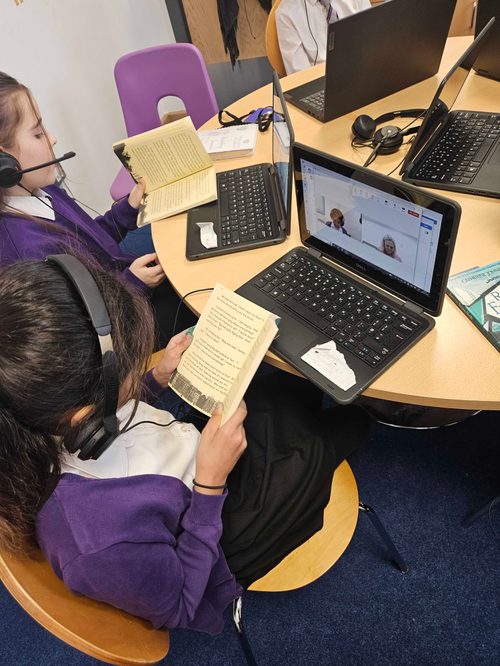
Small groups of six children meet weekly over a 10-week period with a trained Reading Facilitator, who reads alongside them as a fellow reader rather than a teacher. In the first session, children unwrap a box of three books and choose one to read together as a group. Each week, the facilitator adds new books in response to the children's conversations and interests. Children are encouraged to say what they think, and disliking a book is as welcome as loving it. In some clubs, online reading volunteers also join children one-to-one to talk about their reading.
The programme is grounded in The Open University's research on reading for pleasure. The University also evaluated our pilot in 2024-25. Since then, Book Clubs have grown to partner schools serving communities facing disadvantage in Birmingham, Doncaster and London.
Stephanie Lockwood, Book Club Programme Manager, said:
"Being recognised by The Open University and HarperCollins means a great deal to us, particularly as our Book Club Programme is grounded in the Open University's own research on reading for pleasure. At Chapter One, we develop small-group and one-to-one programmes that give children facing disadvantage both the skill and the will to read. Book Clubs focus on the will. They are for children who can read but have decided reading isn't for them. These reluctant readers need choice and autonomy: the chance to decide what they read and to talk about it on their own terms."
Perhaps the best measure of the programme came from one Book Club member, who asked at the end of their sessions: "Is there a Chapter Two Book Club?"

Stephanie's top tips for encouraging reading for pleasure
Hand over the choice. Let children choose what they read, and offer a wide range of formats, including picture books and graphic novels. When reluctant readers have a real say, reading starts to feel like theirs rather than something done to them.
Make sure every child is seen and heard. Listen to what children talk about, including their interests, questions and the things they care about outside school, and bring them books that connect to those things. One of our Book Club children went from openly disliking reading to becoming the group's expert once he found books about fishing, a hobby he shares with his grandad.
Make it safe not to like a book. Be clear that there's no "right" response. Disliking a book, a character or a writing style is as valid as loving it. When adults share their own honest opinions, children gain the confidence to share theirs, and that honest talk is often where a reading identity begins.
It all starts with literacy.
More news
-
Research & Evidence
Reaching reluctant readers: Our Book Club pilot improves attitudes to reading
Pilot project shows how targeted support for older children is reigniting their love of readingFind out more
-

Chapter One team Go All In for Take 10 to Read and a GUINNESS WORLD RECORDS™ title attempt
Chapter One colleagues took time out to read as part of the National Literacy Trust and British Council’s GUINNESS WORLD RECORDS™ title attemptFind out more
-

Ready to read! Business leaders gather for the launch of our national poll
Business leaders gathered in London to hear our poll findings, with a keynote from National Year of Reading director David HaymanFind out more
-
News

Two thirds of parents want more time to read with their children - and working adults are ready to help them
New research from Chapter One shows most working adults would volunteer if their employer supported themFind out more
-
News

Partner, Volunteer and School Recognition Awards 2026
Celebrating our corporate partners, volunteers and school partnersFind out more
-
News

Why volunteering matters for children's reading
Chapter One joins three national literacy charities to call for more reading volunteers during the National Year of ReadingFind out more